Press
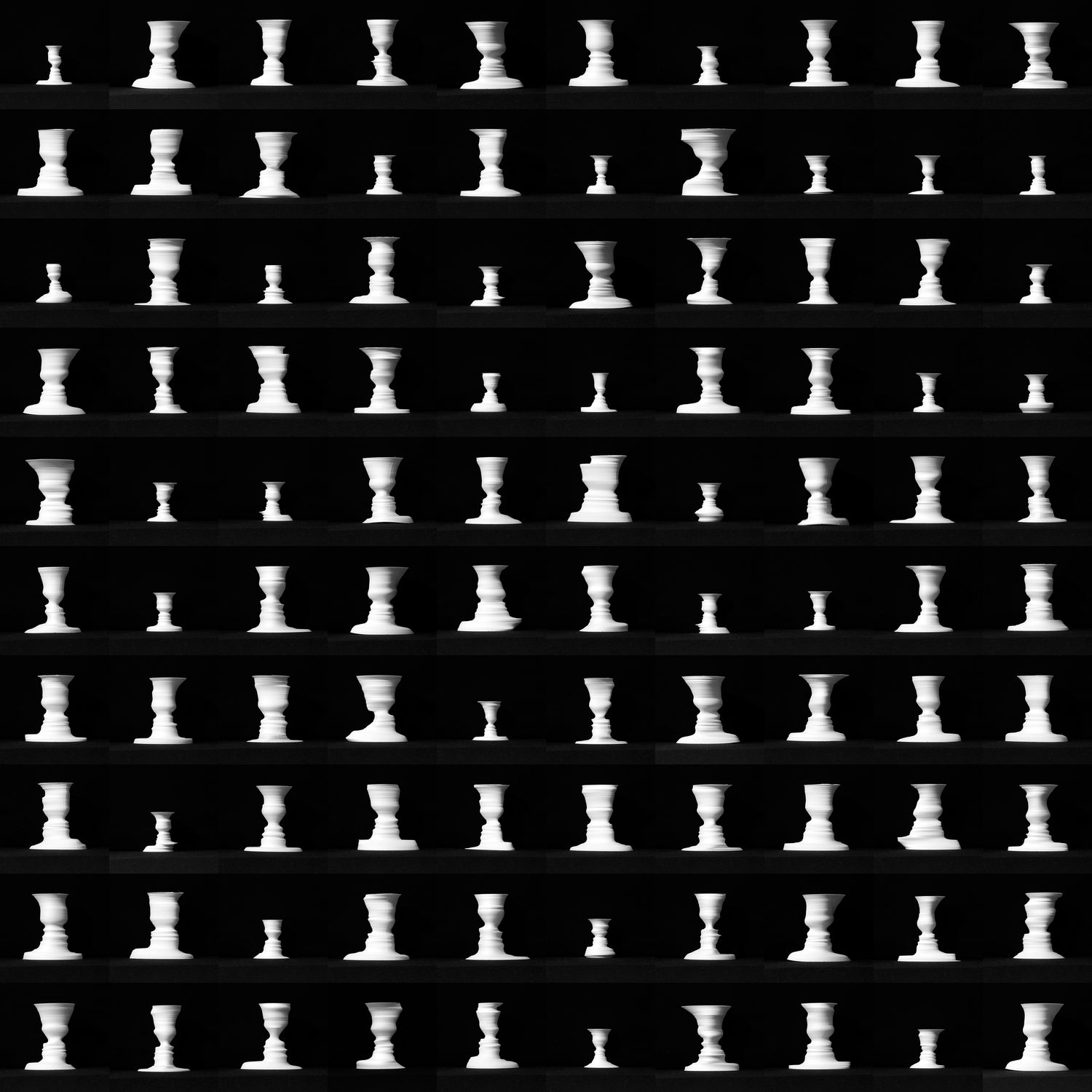
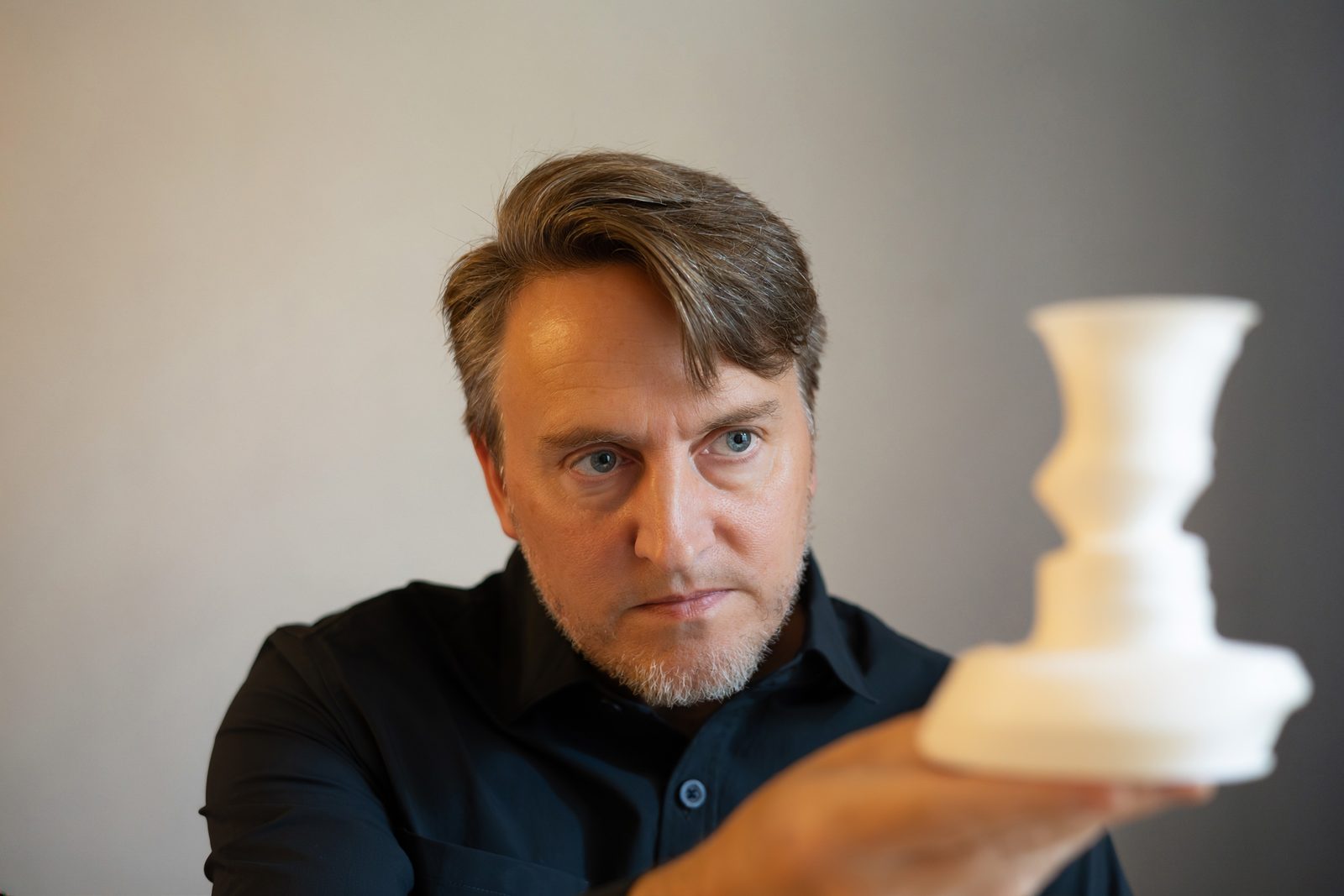
Send a few photographs of people in profile, and their profiles become the outline of a vase. One face, or as many as six. No two are alike, because no two faces are.
Ten years apart
In 2015 our kids were small and 965 backers funded the first Fahz. In 2026 they are grown, the printers are a print farm, and we went back to Kickstarter to see if the idea still held. 89 people backed it. That wasn’t enough to fund, so we opened the store ourselves, and every one of those backers gets the founding price.
2015
2026
Why now
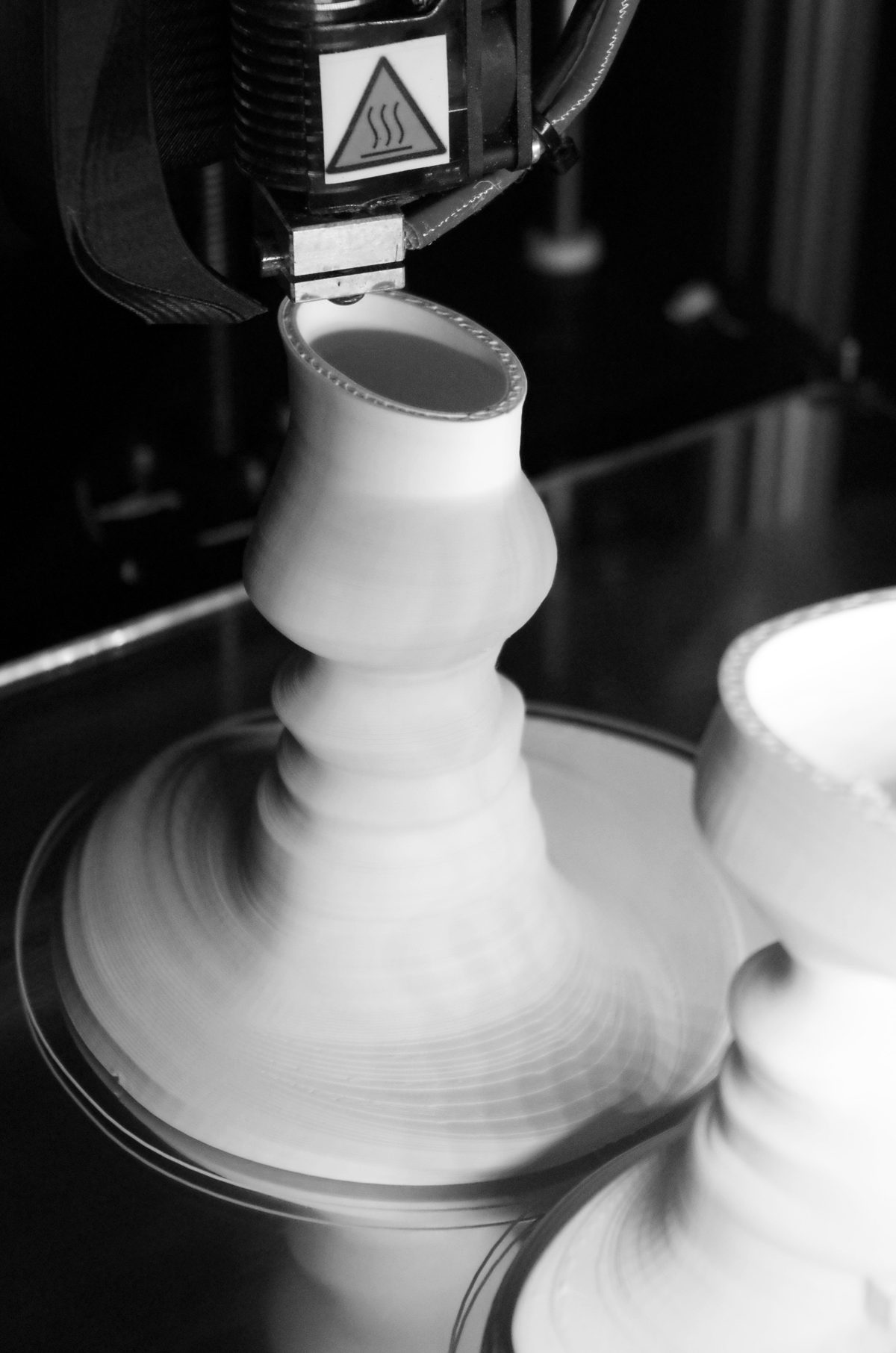
In 2015 every profile was traced by hand, one order at a time, in the evenings, and two printers in a Brooklyn apartment made eight vases at a time, overnight. The vases were never the problem. Everything around them was.
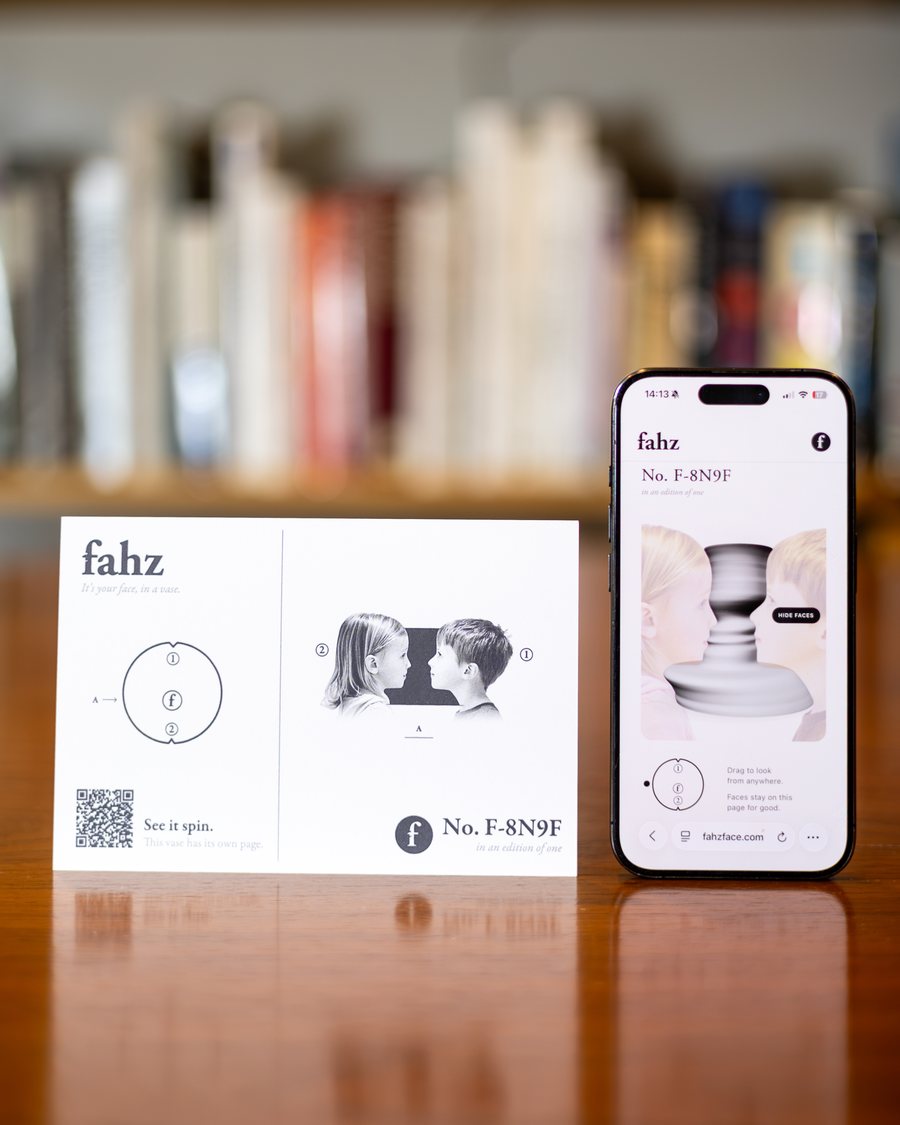
In 2026 none of that lands on a person. You upload a photograph from your phone, and a few seconds later you are turning your own vase in 3D. Change who looks at whom as often as you like. When you order, the file goes straight to a print farm in the United States, and the vase arrives with a card that opens its digital twin.
| 2015 | 2026 | |
|---|---|---|
| The profile | Traced by hand | Found by software in seconds |
| The design | Made for you | Made with you, on your phone |
| The printing | Two printers in an apartment | A print farm, made to order |
| The shipping | Nick, at the post office | Straight from the farm |
| Afterwards | A vase | A vase and its digital twin |
The longer argument is in Lot Size One, an essay on what it actually costs to make one thing at a time.
The object
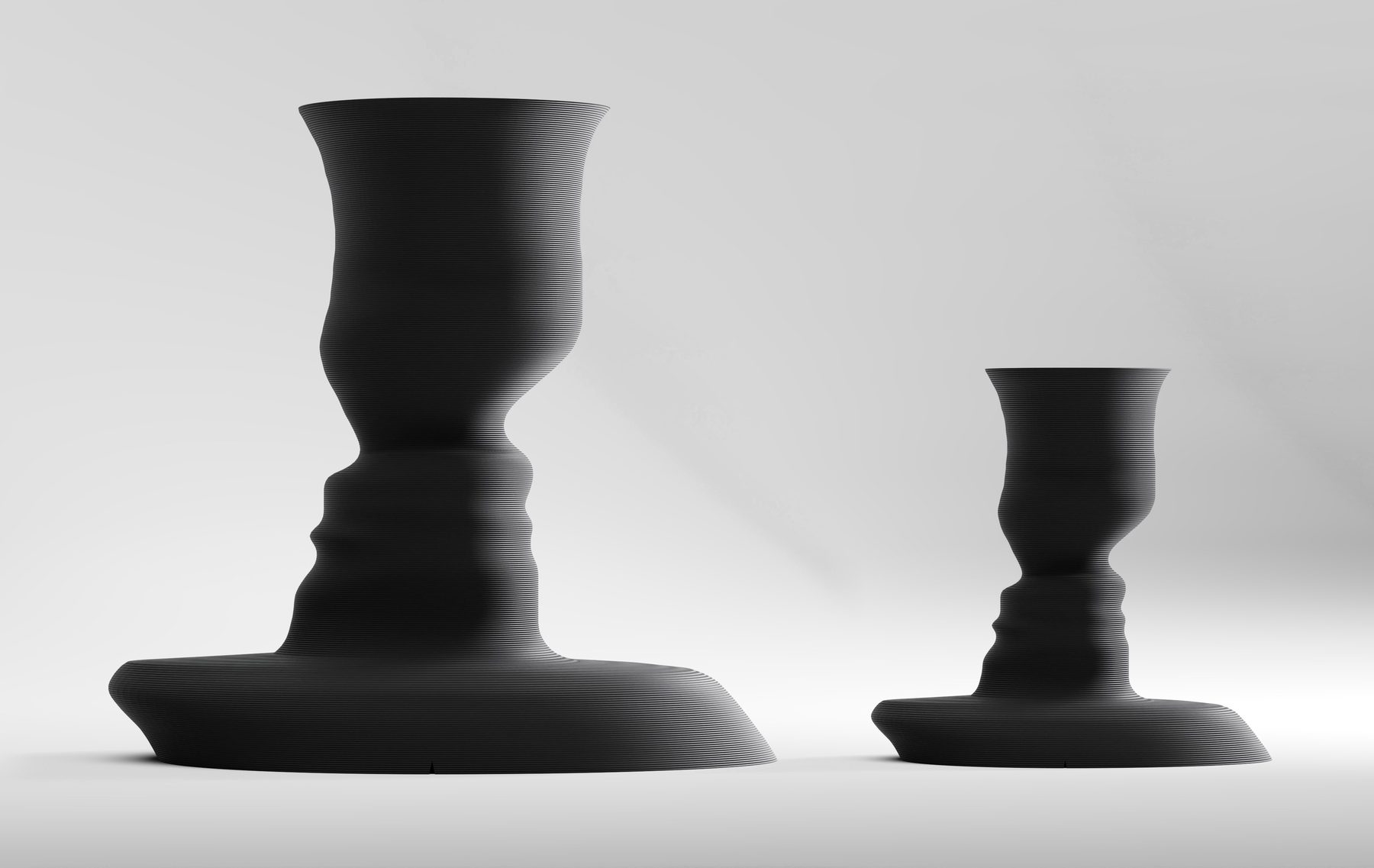
A vase generated
from profile photographs
Sizes and price
5 inch, $70
3 inch, $35
Made
To order, in the US,
about two weeks to the door
Available
fahzface.com,
from 16 November 2026


The object
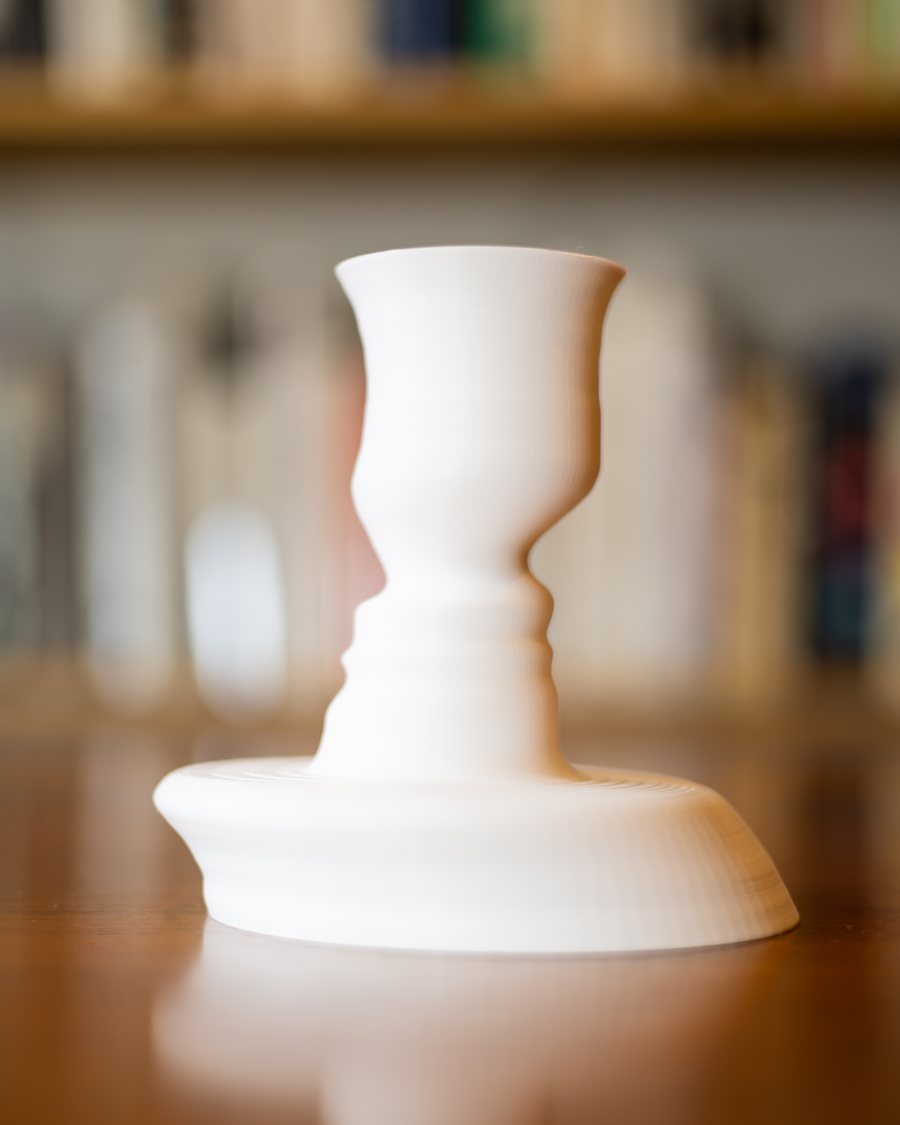
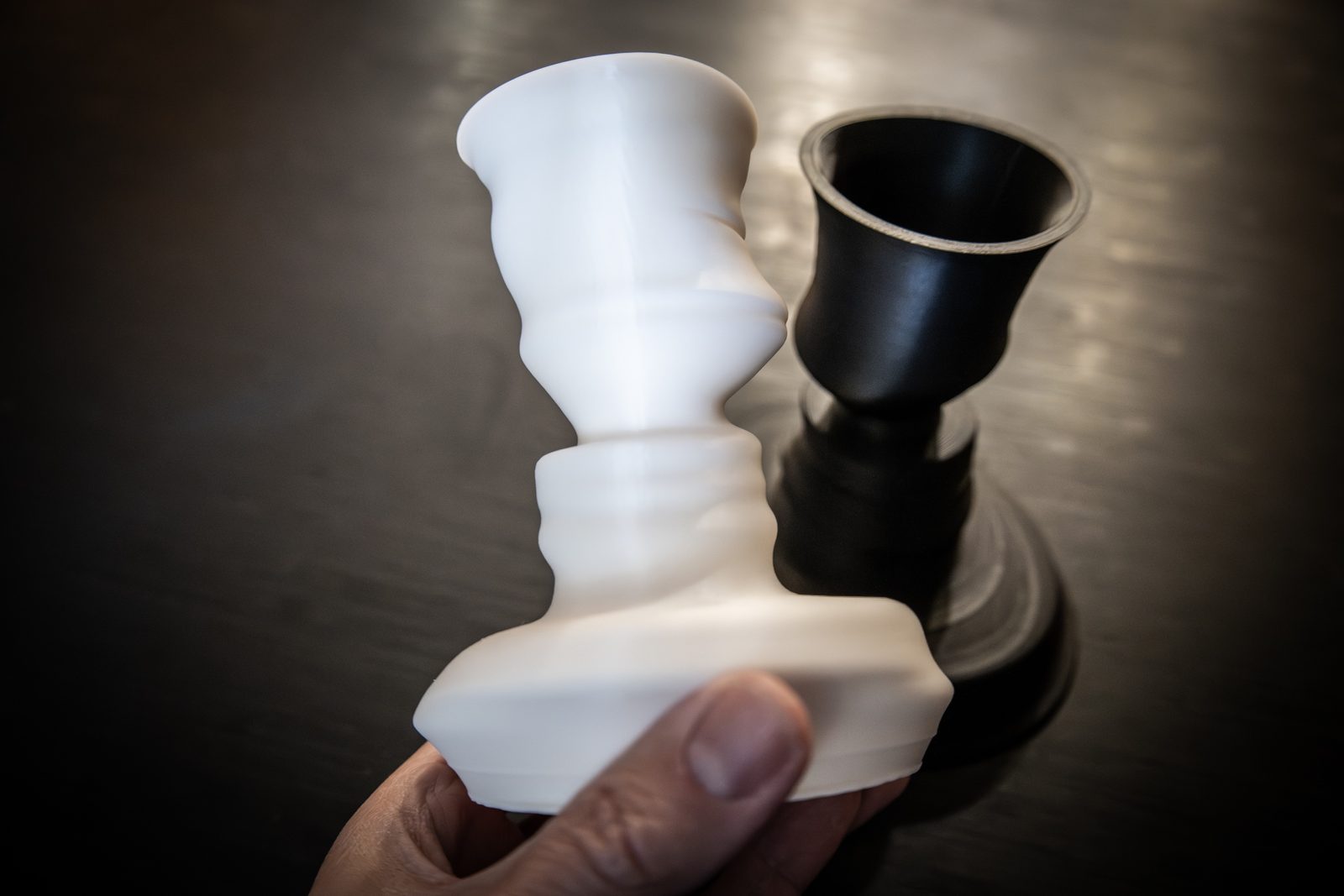
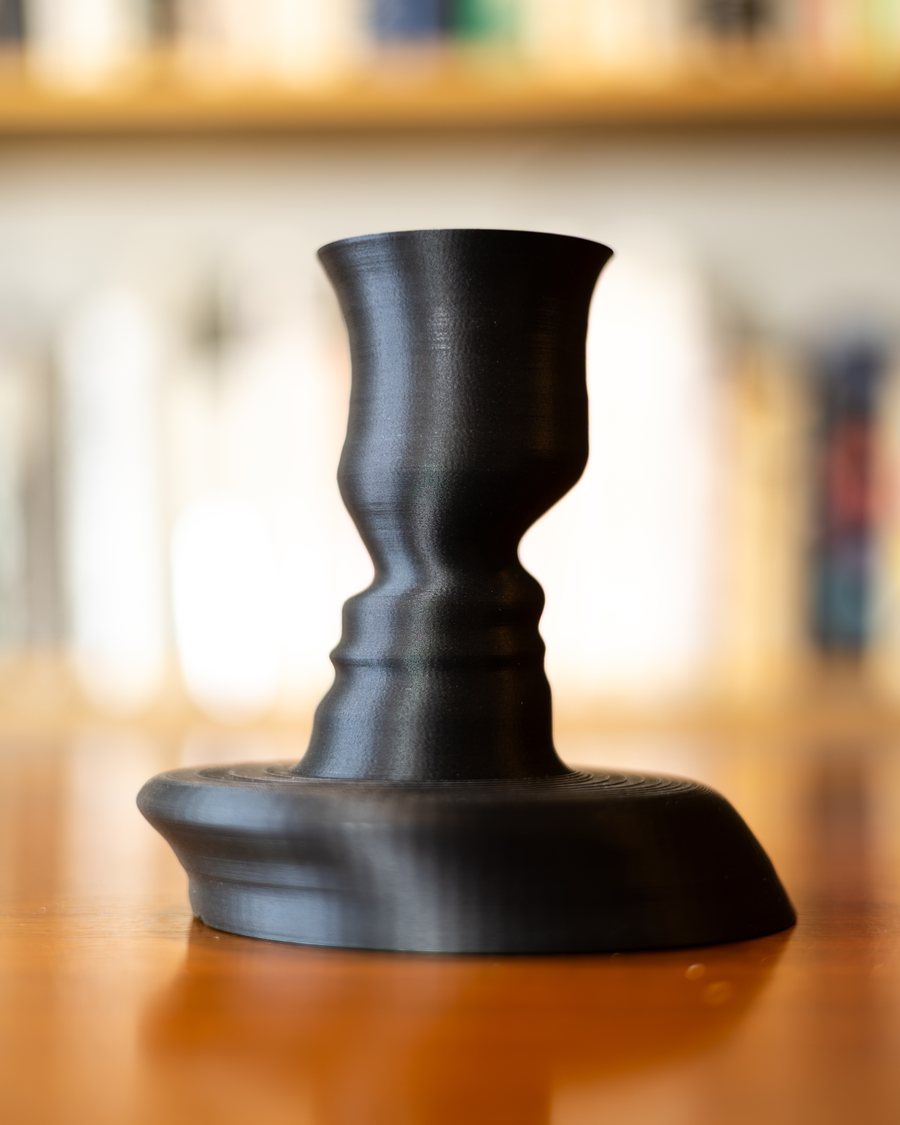
A Fahz is a vase generated from photographs of people in profile. Each profile becomes part of the vase’s own outline, so the object and the people are the same line.
Even numbers pair off and look at each other across the vase. Odd numbers don’t. Turn it, and each person arrives in turn. A small notch under the base marks where every profile sits.
Nobody needs it explained. People find it on their own, then turn it around and hand it to someone else so they can find it too.
“Now I see it. All I saw was the white thing.”Savannah Guthrie, on air, TODAY, 4 May 2017

Its history
Rather than give his wife Martha a vase, Nicholas Desbiens wrote a program that generates them. He has said, more than once, that he could also have just bought a card.
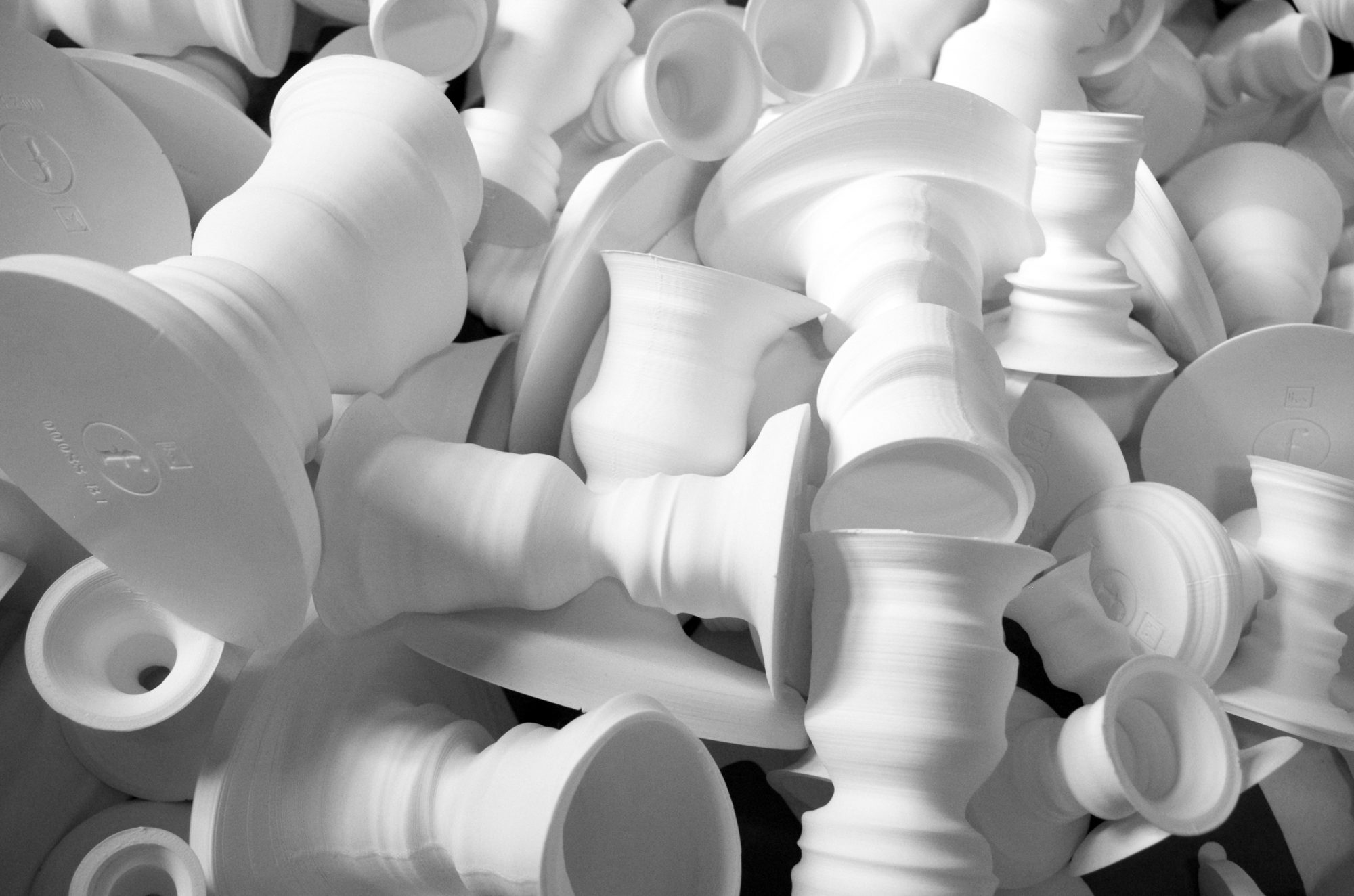
The Kickstarter went up in January 2015 against a $10,000 goal. Between 2015 and 2018 more than a thousand vases were generated from strangers’ photographs, each one chosen and paid for by the person who received it. What stopped it was never demand or the software. It was everything after the printer: labels, padding, the drive to the post office, against a full-time job and two young children.
The first Fahz, 2015 to 2018
$61,102
raised on Kickstarter in 2015, against a $10,000 goal
965
backers in thirty days, 2015
600
vases ordered in the first ten days, 2015
1,000+
unique vases made and shipped, 2015 to 2018
Now the repetitive part runs on software he wrote for the purpose, and the vases are printed at a partner’s print farm in the United States. The design is still his, and he is still in Brooklyn.
Where it has been
Also in Laughing Squid, New Atlas, 3D Printing Industry, 3DPrint.com, Daily Mail, Wired Italia, Der Standard, de Volkskrant, Inhabitat and InStyle.
Images
Credit line: Courtesy of Fahz. Tap an image for the full-resolution file. The kit holds all of these, the turntable loops, the phone walkthrough, the original run and the marks, every file described.
Facts
On the house
If you’re writing about Fahz for a publication, the best way to understand it is to make one. Write to me with where your piece will run and I’ll send you a code: upload a few profiles of people you love, shape the vase yourself, and it arrives at your door like anyone else’s. On me, of course.
Ask for a press code